
lunes, 15 de junio de 2015
Salmonete

lunes, 8 de junio de 2015
Nudibranquio Hypselodoris orsinii Hypselodoris orsinii nudibranch


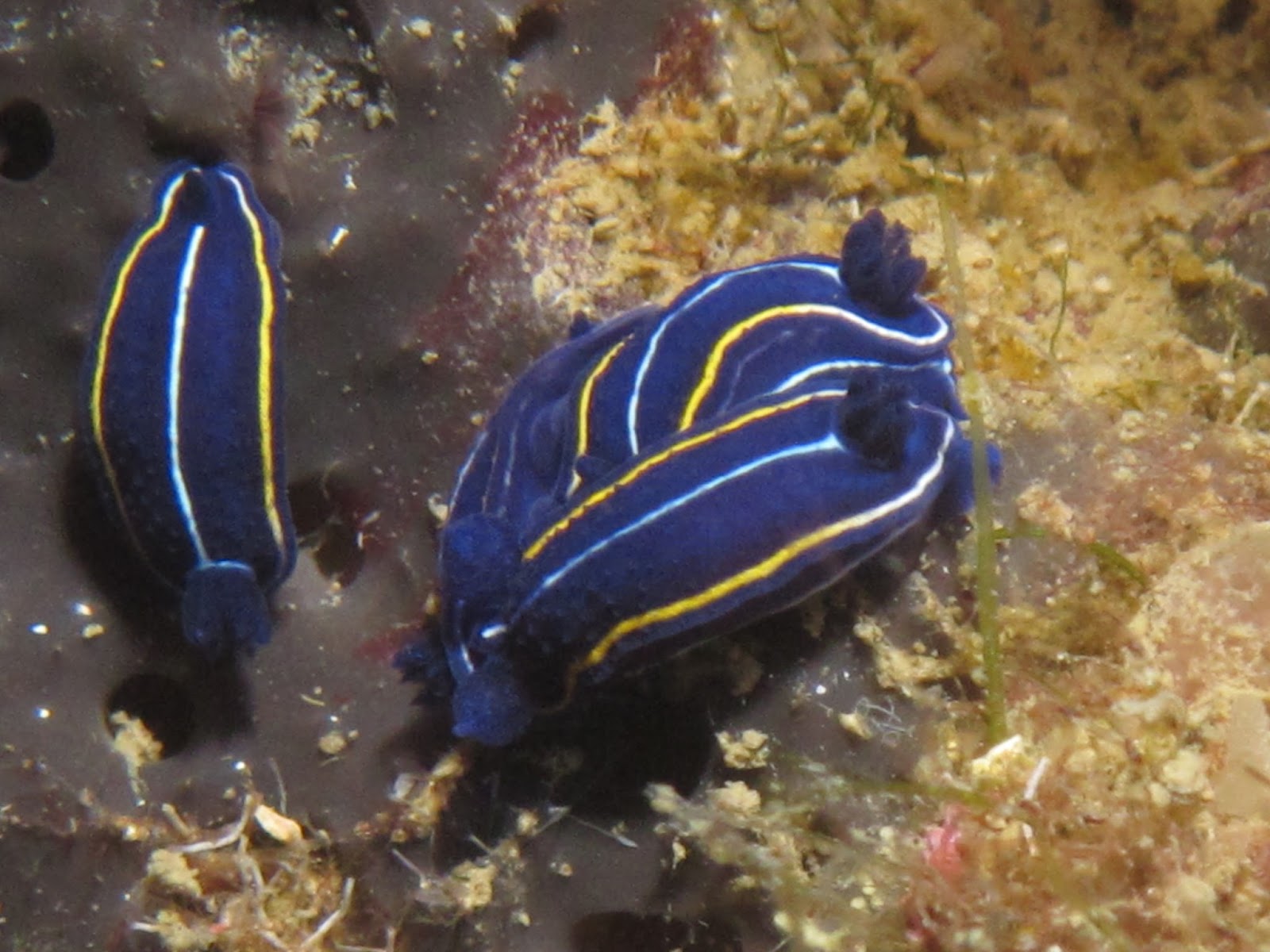
This is the first time I´ve seen more than two nudibranchs, of any species, together in this way. This small nudibranch, Hypselodoris orsinii, measures approximately 0.6", though these were a bit "bunched up". I found these on a shipwreck, The Woodside, on a dive in the Cap de Creus protected area of the Costa Brava. We were at a depth of approximately 70 feet, and the temperature was around 61ºF. Just a beautiful encounter.
Esta es la primera vez que he visto más de 2 nudibranquios, de cualquier especie, juntos de esta manera. Este nudibranquio pequeño, Hypselodoris orsinii, mide, más o menos, 1,5cm, aunque estos estaban un poco "encogidos". Los encontré en un pecio, The woodside, en una inmersión en el área protegida de Cap de Creus, en la Costa Brava. La profundidad era de unos 22 metros, y la temperatura era de unos 16ºC. Un encuentro muy bello.
domingo, 7 de junio de 2015
Esponja Axinella polypoides Axinella polypoides sponge

I have bad luck with photographing this sponge with a nice background and fairly clear water. This past weekend I was in luck and was able to get this nice specimen, about a foot tall at most and 1.5 feet across. It is a beautiful orange color and was in fairly shallow water (less than 35 feet). And, yes, it´s an animal, not a plant.
Tengo mala suerte con poder fotografiar esta esponja con un fondo agradable y en aguas claras. Este fin de semana pasado tuve suerte y le saqué una foto a este ejemplar, de unos 30cm de algo y de unos 45cm de ancho. Su color anaranjado le da un buen toque a aguas someras (este estaba en unos 10-11 metros). Y, sí. Es una colonia animal, no vegetal.
Nudibranquio Chromodoris luteorosea Chromodoris luteorosea nudibranch


Here is a series of retrospective photos of one of the smallest, and rarest, nudibranchs, at least for me since this is only the second one I´ve seen. It´s name is Chromodoris luteorosea and is very small, roughly 0.4" in length, though I´ve read that they can grow to over 1" long. Its exaggeratedly long rhinophores are immediately visible, however, its coloration is what catches one´s eye. Its branchia, also lilac, are just forward of the end of its body, at the very rear of its dorsal area. I was very lucky to be able to photograph its underside, specifically its mouth area, when it raised up, for whatever reason, as it was crossing over the sponge in the photo. The depth was approximately 40 feet and the temperature was 61ºF. A very unexpected, though greatly desired, encounter. This made my dive. Enjoy.
Aquí hay una serie de fotos retrospectivas de uno de los más pequeños, y raros, nudibranquios, al menos para mí puesto que solo es el segundo que he visto. Se llama Chromodoris luteorosea y es muy pequeño, 1cm, aunque he leído que llegan a superar los 3cm. Sus rinóforos exageradamente largos se ven en seguida, sin embargo, su colorido es lo que llama la atención. Sus branquias, también de color lílac, se encuentran justo delante del final de su cuerpo, en la parte trasera de su dorso. Tuve mucha suerte a poder fotografiar la parte de abajo de su cuerpo, la zona de su boca, cuando se levantó, para alguna razón, mientras atravesaba la esponja en la foto. La profundidad fue de unos 12 metros y la temperatura de unos 16ºC. Un encuentro inesperado, pero enormemente deseado. Fue la guinda de mi inmersión. A disfrutarlo.
Nudibranquio Dondice banyulensis Dondice banyulensis nudibranch


I found this wonderful, large Dondice banyulensis nudibranch at my favorite nudibranch dive-site. It measured 1.6" and was on the move, trying to get out of a depression in the rocky area it was in. Every detail is easily seen and identifiable: its rhinophores, branchia, some of its internal organs (due to its translucent body) and even its right eye (in the lower photograph: a tiny black dot beneath its rear rhinophores). Just a beautiful animal.
Encontré este genial nudibranquio Dondice banyulensis grande en mi sitio preferido para nudibranquios. Medía unos 4cm e iba intentando salir de una depresión en la zona rocosa en que se encontraba. Cada detalle de su cuerpo es fácil ver e identificar: sus rinóforos, branchios, algunos de sus órganos internos (debido a su cuerpo traslucente), incluso su ojo derecho (en la ojo de abajo: un puntito negro debajo de su rinóforos traseros). Sencillamente un animal bellísimo.
Nudibranquio Flabellina babei Flabellina babei nudibranch


I found this Flabellina babei nudibranch on a dive at our favorite nudibranch dive site, on the Costa Brava. A nice adult specimen of approximately 1" in length. Its translucent body, "spike" branchia and both sets of rhinophores are clearly seen. A wonderful nudibranch. The depth was of 40 feet, and the temperature was about 61ºF.
Encontré este nudibranquio Flabellina babei en una inmersión en nuestro sitio favorito de nudibranquios, en la Costa Brava. Un buen ejemplar adulto de unos 2,5cm. Su cuerpo trasluciente, branquias "pelo-pincho" y ambos pares de rinófores se ven nítidamente. Un nudibranquio genial. La profundidad fue de unos 12 metros y la temperatura de unos 16ºC.
Nudibranquio Hypselodoris (Felimare) fontandraui Hypselodoris (Felimare) fontandraui nudibranch


I found these two Hypselodoris (Felimare) fontandraui nudibranchs together. The differences in exact coloration on their backs could be due to one being an adult and the other being a juvenile, though I´m not sure and welcome any clarification. Very small, about 1.5cm, it was a very nice find. The depth was approximately 60 feet and the temperature was around 61ºC
Encontré estos dos nudibranquios Hypselodoris (Felimare) fontandraui juntos. Las diferencias en su colorido dorsal se pueden deber a que uno sea adulto y el otro un juvenil, aunque no estoy seguro y cualquier clarificación será bienvenida. Pequeños, de unos 1,5cm, fue un encuentro muy bonito. La profundidad fue de unos 18 metros y la temperatura de unos 16ºC
Suscribirse a:
Entradas (Atom)